Skip to the content
Return to the Classroom
Animals from Around the World
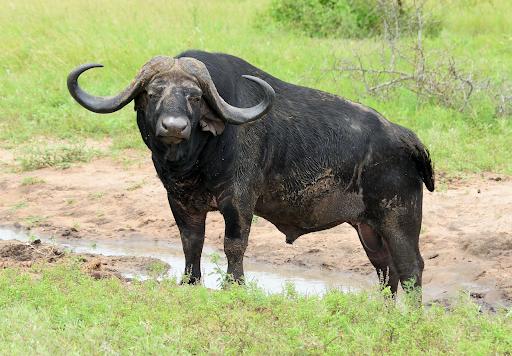
Water buffalo
-
Animal class: Mammals – (They are warm-blooded (the body temperature stays about the same temperature without help from the sun), breathe air with lungs, have a 4 chamber heart, have 3 bones in their inner ears, have vertebrae (a backbone or spine), have hair or fur (even whales and dolphins have some hair near their mouths), almost all species have a live birth, but 2 species lay eggs (the platypus and the echidna), all females produce (their bodies make) milk for their young, most have 4 legs or for humans, 2 arms and 2 legs, sizes range from the Bumblebee bat at 1 in (3 cm) to the Blue whale at 100 ft (30 m)) (Examples: Whales, people, dogs, and elephants. There are about 6,500 different species.)
- Diet: Herbivores (They only eat plants): Grass, plants, fruit, tree bark, herbs, and bushes
- Lifespan: About 25 years
- Predators: Tigers, humans, crocodiles, and leopards
- Size: About 6 ft (183 cm) tall, and their horns are about 5ft (152 cm) wide
- Species: There are about 74 different sub-species of buff alo, but only three species of water buffalo: American buffalo, Cape buffalo, and Water buff alo.
- Speed : About 30 mph (49 kph)
- Status: Endangered (about 4,000 wild buffalo left )
- Weight: 1,400-2,600lbs (635-1,180kg)
 Where do they live?: The wild water buffalo live in the tropical regions of China and Southeast Asia but are on every continent. (You will not find them in the Arctic or Antarcti c).
- People have been using these animals for about 5,000 years. They would use them for their meat, milk, horns, and fur to help travelers on their farmlands and carry heavy loads. People today still use the water buffalo in the same way.
- People have used their horns for medicine, jewelry, musical instruments, and more.
- They are excellent swimmers! They will spend most of their days in the muddy swamp water to cool off (they don’t have sweat glands to stay cool) and even dive under the water to find plants to eat.