Skip to the content
Return to the Classroom
Animals from Around the World
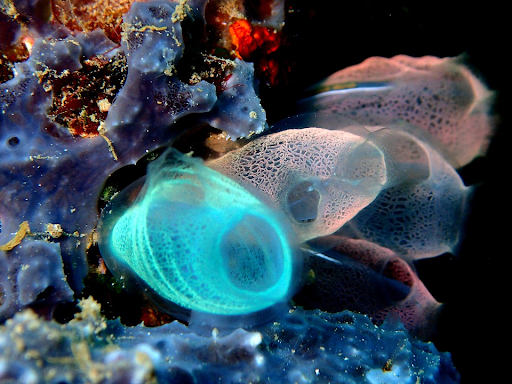
Sea squirts
-
Animal class: Ascidiacea (Are invertebrates (with no backbone or exoskeleton (an outer skeleton around the whole body to help protect them)), have a rough and sometimes thick or thin outer skin called a “tunic” (made from cellulose and acts like an exoskeleton), have 2 openings for water and food entering and exiting the body, the do not need a mate to reproduce (to have a baby), aft er the egg fertilizes, a tadpole like ascidiacea swims using its tail to find a hard surface, once attached it will go through a metamorphosis (their bodies change) where they will absorb (eat) their brain, eye, and spine for nutrients since they will live there forever and will change into their final form, and their sizes range from the Minipera pedunculata (a type of sea squirt) at 0.02 in (0.05 mm) to the Antarctic Distaplia cylindrica (an attached colony of sea squirts) at 23 ft (7 m)) (Examples: Skeleton Panda sea squirt, Sea pineapple sea squirt, Star tunicate, and Sea Potato sea squirt) There are around 2,000 different species)
- Diet: Omnivore (They eat plants and meat): Algae, plankton, bacteria, and the remains of dead plants and animals
- Lifespan: 7-30 years
- Predators: Eels, fi sh, starfish, sharks, and snails
- Size: 0.3-5 in (0.7-12 cm)
- Species: There are 2,000 different species
- Speed: These animals can move 0.7 in (2 cm) a day
- Status: Not Endangered
- Weight: About 4-7 oz (0.1-0.2 kg)
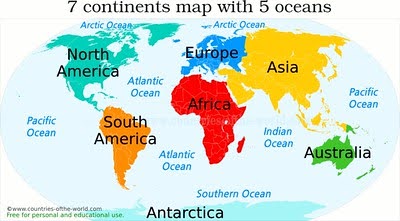 Where do they live?: They live in every ocean, from the cold Arctic to the warm tropical Indian Ocean.
- They can be found in the deep and shallow parts of the ocean. And they will attach themselves to rocks, seashells, docks, and boats moving across the world.
- Most of these species are poisonous.
- When they are born, they have a brain, but once finding a place to call home, they will absorb (eat) their brain. Since they will stay in the same place for their whole lives, they do not need a brain. When they absorb (eat) their brains, this gives them nutrients (food) until their next meal floats in front of them.
- People can find this animal in many shapes and sizes. They can be almost every color and have shapes like tubes, hearts, bells, plant-like, and even a skeleton (the panda sea squirt).
- When you take this animal out of the water, it will squirt the water out of its body. The squirting water is where the Sea squirt gets its name.
- Some species can be eaten by people and enjoyed by many countries.